
Barre Pilates: The Complete Guide — Benefits, Classes & 4‑Week Beginner Plan
What is Barre Pilates?
Origins and how it combines ballet, barre work and Pilates principles
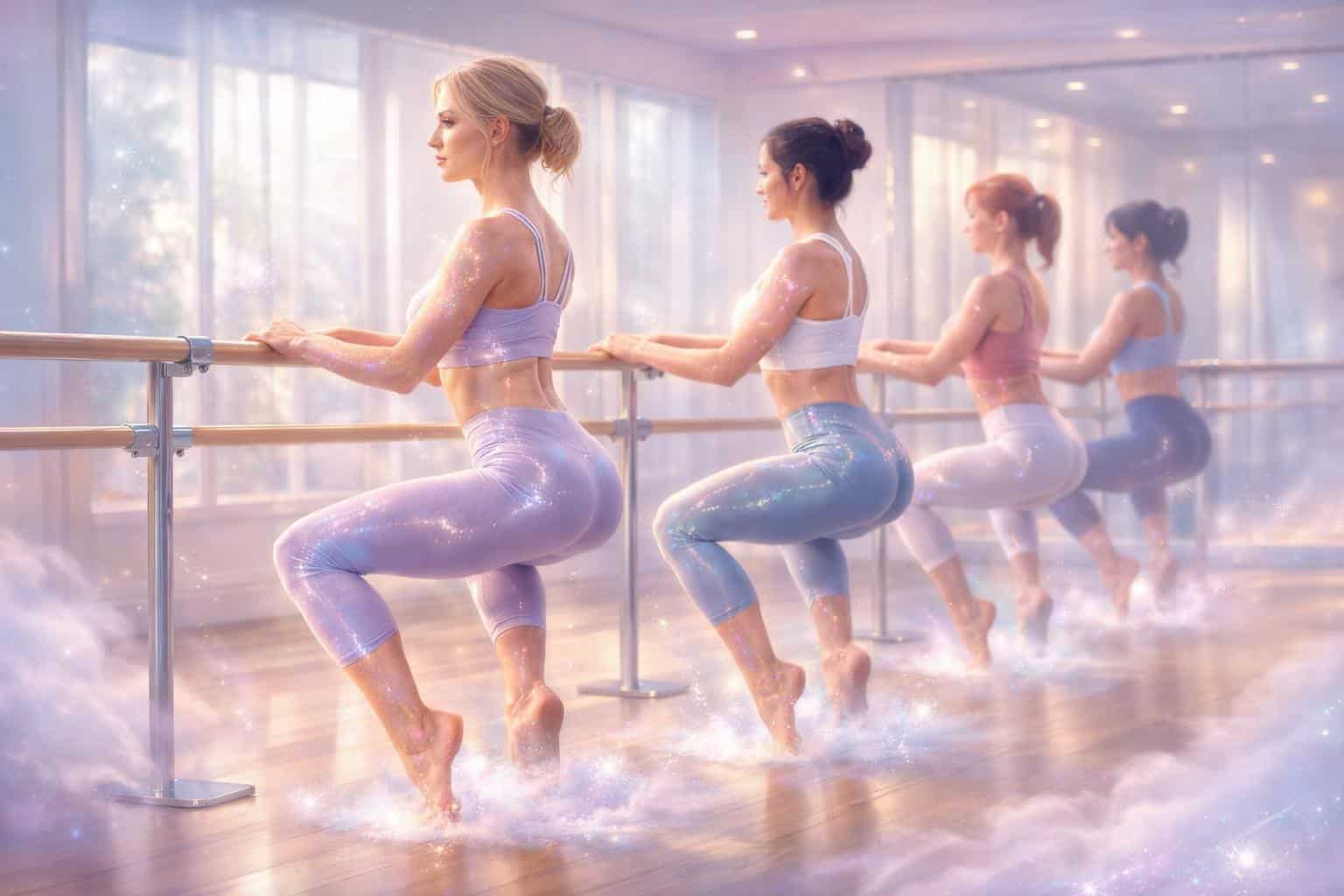
Barre pilates is a hybrid exercise method that blends classical ballet barre exercises with the breath, alignment and core-focused principles of Pilates.
It borrows small, isometric movements and the hand-on-barre support from ballet training, then layers in Pilates sequencing and emphasis on spinal alignment to create precise, repetitious work targeting small stabiliser muscles.
Who benefits most (fitness levels, goals, and contraindications)
This style suits many fitness levels: beginners who want low-impact conditioning, intermediate exercisers seeking improved posture and athletes looking for muscle endurance and control.
You’ll benefit most if your goals include toning, posture correction and joint-friendly strengthening. However, people with unstable acute injuries, certain balance disorders or specific pregnancy restrictions should check with a healthcare professional before starting.
Top Benefits of Barre Pilates
Strength, posture and muscle-tone improvements
Barre pilates emphasises small, repeated muscle contractions that build endurance and definition without heavy loading.
Because exercises target postural muscles and the posterior chain, you’ll often notice improved spinal alignment, a firmer core and more tone in the hips, thighs and glutes over time.
Balance, mobility and mind‑body connection
The combination of controlled Pilates breathing and ballet-inspired balance work enhances proprioception and mobility.
Barre Pilates vs. Barre vs. Pilates — Key Differences
Movement, tempo and core engagement: what changes between formats
Traditional barre classes lean on ballet-derived positions and higher-rep isometrics, while Pilates focuses on core sequencing and controlled full-range movements.
Barre pilates sits in the middle: movements are small and tempo-driven like barre, but you’ll often find explicit cues to engage the deep core and use breathing patterns borrowed from Pilates.
Equipment, class pacing and typical workout intensity
Pure barre classes typically stay at the barre with light weights and pulses; Pilates may use mat work or reformers with slower, deliberate pacing.
What to Expect in a Class
Typical class structure (warm‑up, barre work, floor/core, cool‑down)
A standard barre pilates session opens with joint mobilisation and breath-based warm-up, moves into standing barre sequences for legs and glutes, transitions to floor-based core and lengthening work, and finishes with stretching and a calming cool-down.
Instructors often cue alignment repeatedly to keep form precise throughout.
Common class lengths and music/tempo variations
Classes commonly run 45–60 minutes, with express 30-minute options available. Music may be upbeat during barre segments to keep tempo for pulses, then gentler for Pilates-style floor work.
4‑Week Beginner At‑Home Plan
Week‑by‑week focus and progression (mobility → strength → endurance → blend)
Week 1: mobility and alignment — learn neutral spine, pelvic positioning and basic footwork.
Week 2: foundational strength — introduce isometric holds and small pulses for hips and thighs. Week 3: endurance — increase reps and add short sequences of continuous movement. Week 4: blend — combine standing barre sequences with longer floor core circuits to build stamina and coordination.
20‑minute sample beginner routine with clear exercises and reps
Warm-up (3 min): marching in place, ankle circles, shoulder rolls. Barre standing (8 min): plié pulses (3 sets x 30 sec), single-leg balance with small relevés (2 sets x 10 each), standing hip abductions (2 sets x 12 each). Floor/core (6 min): pelvic tilts (2 sets x 12), dead bug (2 sets x 10 each side), bridge pulses (2 sets x 20). Cool-down (3 min): hamstring stretch and spinal twist. Rest 30–45 seconds between sets.
Equipment, Props and Affordable Alternatives
Studio staples (barre, light weights, resistance bands, small ball)
In a studio you’ll commonly see a wall-mounted or freestanding barre, 1–3 kg hand weights, loop resistance bands, and a small Pilates ball for inner-thigh and core work.
These props add small resistance and feedback to refine alignment and increase challenge without heavy loading.
No‑equipment substitutions and safe household alternatives
No barre? Use the back of a sturdy chair. Replace light dumbbells with water bottles or cans, and use a folded towel as a small ball substitute.
Modifications, Common Injuries and Safety Tips
How to modify for knees, lower back, pregnancy and joint issues
For knee pain, reduce range of motion in pliés, avoid deep squats and prioritise isometrics at higher hip heights.
For lower back sensitivity, emphasise pelvic neutral, avoid excessive lumbar curl-ups and choose gentle core activation like modified dead bugs. Pregnant clients should avoid supine exercises after the first trimester and follow prenatal guidance; consider seated or supported variations for balance concerns.
Three common form mistakes and how to fix them
Mistake 1: collapsing through the shoulders — fix by drawing shoulder blades down and keeping the chest open.
Practice Frequency, Progression and Tracking Results
How often to practice for different goals (tone, posture, weight loss)
If your goal is tone and posture, 2–4 sessions per week provides consistent stimulus without overtraining.
For weight loss, combine barre pilates with cardio and calorie-conscious eating and aim for 3–5 sessions plus aerobic activity. For maintenance, 1–2 weekly classes can preserve gains.
How to progress — when to add weight, reps or higher‑tempo intervals
Progress when exercises feel easy for the target rep range and you maintain clean form: add light weights (0.5–2 kg), increase reps or extend pulse duration, or introduce short higher-tempo intervals to raise metabolic demand.
Choosing a Studio or Online Class
What to look for in instructors and class descriptions
Choose instructors who cue alignment clearly, explain modifications, and demonstrate movements for different levels.
Class descriptions should list intensity, props used and whether the session blends barre with Pilates or leans more toward one format — useful when searching for genuine barre pilates or pilates barre classes.
Questions to ask on your trial and red flags to avoid
Ask about class size, instructor qualifications and how they handle injuries or pregnancy. Red flags include teachers who ignore form, classes that push pain as progress, or sessions that lack variation and only use heavy bouncing at the barre. See the Privacy Policy for site details.
Evidence, Expectations and Realistic Outcomes
What research and expert sources say about benefits and limits
Research on hybrid methods supports improved muscular endurance, balance and posture with low-impact, high-repetition formats; however, barre pilates alone is not a high-calorie-burn method compared with vigorous cardio.
Experts recommend it as an effective complement to strength and aerobic training rather than a sole modality for major weight-loss goals.
Typical timeline for seeing results and estimated calorie/effort ranges
Most people notice postural and muscle-tone changes within 4–8 weeks with consistent practice.
Frequently Asked Questions
Can I lose weight with barre pilates? Do I need dance experience?
You can lose weight with barre pilates if it’s part of a broader calorie-deficit plan that includes cardio and nutrition control; on its own it provides tone and improved posture more than large calorie burn.
You do not need dance experience — instructors typically teach positions and offer beginner-friendly cues.
Is barre pilates suitable for men and older adults?
Yes. Men and older adults can benefit from the joint-friendly strength, balance and posture work. Classes often provide scalable modifications to suit different body types and mobility levels, making barre pilates accessible across ages and genders.
To stay informed about local training opportunities, check Upcoming Events and Activities and plan your next class with confidence.
If you want a simple reference point, W3 Statistics Free for small websites can help you keep an eye on site resources while you explore routines.
Next Steps and Resources
How to build a sustainable weekly routine and combine with other training
Start with 2 sessions per week and add complementary cardio (e.g., brisk walking or cycling) 2–3 times weekly.
Include at least one session of heavier resistance training if your goal includes significant strength gains, and prioritise rest and mobility days to avoid overuse.
Recommended class types and tools/apps to try first
Try beginner barre pilates or pilates barre classes labelled ‘foundations’ or ‘intro’. Popular fitness apps and streaming platforms offer short 20–30 minute express sessions useful for at-home practice.
For tools, begin with a sturdy chair, light handweights and a resistance band before investing in studio-specific props.